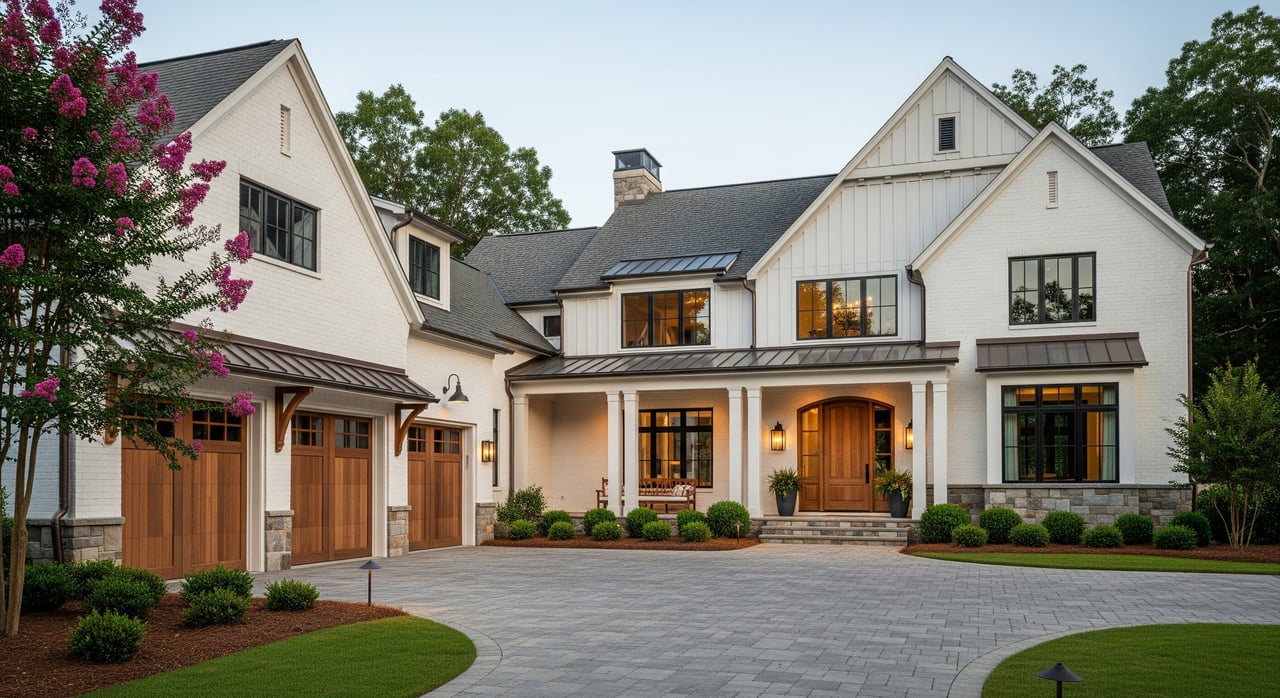
Trying to choose between a spec, semi-custom, or full custom home in Indian Trail? You are not alone. When you are relocating or moving up in Union County, it can be hard to balance timeline, budget, and how much you want to personalize. In this guide, you will learn what each build path really means here, how long it typically takes, what drives cost, what to check with permits and HOAs, and a simple way to match your priorities to the right option. Let’s dive in.
What each build type means
Spec homes
A spec home is built by a builder without a committed buyer, often using a proven floor plan and preset finish packages. You get the fastest path to move-in and more predictable pricing. If you buy a near-complete spec, you can often close in 30 to 60 days once it is ready.
- Best for: Speed, predictable costs, and buyers who prefer to see the finished product.
- Pros: Shortest timeline, fewer decisions, standard mortgage financing.
- Cons: Limited personalization and potential small premiums in tight markets.
Semi-custom homes
A semi-custom home starts with a set floor plan, then allows plan tweaks and finish upgrades within set guidelines. You can adjust layouts within limits, choose options, and select site-specific features.
- Best for: Buyers who want balance between personalization and timeline.
- Pros: Good mix of design flexibility and predictability, faster than custom.
- Cons: Higher cost than spec and choices limited to the builder’s offerings.
Custom homes
A custom home is fully bespoke, often designed with an architect or custom builder. You control layout, materials, and finishes, often on your own lot.
- Best for: Unique needs, site-driven design, and flexible timelines and budgets.
- Pros: Full control over design, orientation, and materials.
- Cons: Longest, most complex process with more financing steps and cost variability.
Indian Trail market context
Indian Trail sits in Union County within the Charlotte metro. The area has seen strong new-home development that attracts families seeking suburban lots and commutable access to employment centers. Inventory and lot availability change with market cycles, so you will want to look at real-time new-construction listings and local permit filings when you are ready to shop.
Local factors can shape your choice. Larger packaged subdivisions often favor spec and semi-custom options, while private or acreage lots are better suited for custom builds. Zoning and HOA rules in subdivisions can limit exterior choices, so review guidelines early. Commute patterns and school-year timing often push buyers toward quick-move spec homes in desirable areas.
Timelines and process in Indian Trail
Timelines are averages. Local permitting, weather, utility scheduling, and material lead times can add weeks. Always confirm specifics with your builder and the Town of Indian Trail or Union County.
Spec home timelines and steps
- Typical build time is about 3 to 6 months from start of construction if the lot and permits are ready.
- If you purchase a near-complete spec, plan for about 30 to 60 days to close after final completion.
- Local checkpoints: verify lot grading and utility hook-ups, builder warranty coverage, and the status of inspections and disclosures.
Semi-custom timelines and steps
- Typical build time is about 4 to 9 months, depending on plan changes and material lead times.
- Process: choose a plan and options, receive revised pricing, secure permits for the specific plan, then build with scheduled finish selections.
- Local checkpoints: allow several weeks for plan review with the Town of Indian Trail or Union County and factor in HOA architectural review if the lot is in a subdivision.
Custom timelines and steps
- Typical timeline runs 8 to 18 months or longer, depending on design complexity, site work, and approvals.
- Process: secure a site or lot, complete design and engineering, coordinate utilities, submit permits and HOA approvals, then build through inspections and close.
- Local checkpoints: septic or stormwater needs, grading, civil engineering, longer plan reviews, and possible rezoning or variance steps if the site requires it.
Costs and financing basics
Your total cost includes the lot, base home price, upgrades and options, site work, permits and fees, utilities, and builder overhead. Sloped or wooded lots can add cost for grading and retaining structures. Popular locations or cul-de-sacs may include lot premiums.
- Spec cost behavior: Most price predictable because the builder preselects finishes.
- Semi-custom cost behavior: Base price plus incremental cost for allowed changes. Budget a 5 to 10 percent contingency for upgrades and finish choices.
- Custom cost behavior: Highest variability. Budget a 10 to 25 percent contingency for design changes, unknown site conditions, and specialty systems.
Financing also varies:
- Spec and semi-custom: Usually close with a standard mortgage after the certificate of occupancy. Builders sometimes offer incentives through preferred lenders, so compare terms.
- Custom: Often financed with a construction loan, which is interest-only during the build and converts to a mortgage at completion. Expect more documentation, appraisals, and a draw schedule.
For resale, new builds often appraise at or near contract price when there are comparable new homes nearby. Highly specialized custom features may not fully appraise, so keep future market appeal in mind.
How to find and vet real examples
Use multiple sources to see what is truly available in Indian Trail and nearby Charlotte suburbs like Matthews, Weddington, Stallings, and Mint Hill.
Where to look:
- MLS searches filtered for new construction.
- Builder community pages that list active neighborhoods in and around Indian Trail.
- Union County property records and permitting databases for recent permits and builder contacts.
- Drive neighborhoods for model homes, “now selling,” and quick-move signage.
- Local online community groups for homeowner experiences.
What to check:
- Build type labeling such as inventory, quick move-in, custom, or semi-custom.
- Lot attributes, including slope, trees, and orientation that affect site work.
- HOA restrictions that can limit exterior styles and materials.
- Warranty coverage and how post-closing service is handled.
- Upgrade packages and a line-item breakdown of base price versus options.
- Time to completion, plus any contract language about delays and contingencies.
- Builder track record, completed neighborhoods, recent closings, and references.
Decision flow: which path fits you
Use this simple decision map to match your priorities to a build type.
- Need to move within about 3 months or want very few decisions to make → Choose a spec home.
- Want a balance of personalization and predictability on a moderate schedule → Choose semi-custom.
- Require unique design, site-driven solutions, or the highest level of finishes and can accept longer timelines and higher cost → Choose custom.
- Fixed budget and want the best finishes within your cap → Start with spec inventory and negotiate upgrade packages.
- Care about resale appeal → Favor popular semi-custom layouts with widely appealing finishes and avoid overly niche custom elements.
- Lot is your priority, such as acreage or views → Go custom, or find a semi-custom builder that will incorporate significant site-specific changes.
Practical tips for relocating families
- Align your timeline with the school year when possible. Spec homes give you the best chance to hit tight dates.
- Evaluate commute times based on current roads, not just future plans. New communities sometimes wait on infrastructure improvements.
- Budget for after-market items like fencing, yard work, and shade trees since new builds often start with minimal landscaping.
- Choose your builder carefully. Local builders may navigate Indian Trail processes and neighborhood details well, while regional and national builders often offer streamlined systems and standardized warranties.
- For semi-custom or custom contracts, consider a deeper review of specifications, change-order processes, and allowances before you sign.
Questions to ask builders
For spec homes
- Is the home complete, and if not, what is the estimated completion date?
- What is included in the price and what counts as an upgrade?
- What warranties are included and who manages warranty claims after closing?
- Are there pending permits or inspections that are not yet closed?
For semi-custom homes
- Which plan modifications are allowed and how are changes priced?
- How many selection meetings will you have and what are the deadlines?
- What are the allowances for appliances and fixtures, and how are overages handled?
- Does the builder control future phases or neighboring lots on the community map?
For custom homes
- Who leads the design process and provides architectural drawings?
- What are the expected engineering and site costs, and who pays for them?
- How are cost overruns handled and how are change orders priced?
- What is the timeline for plan approvals and inspections, and can you see a sample lender draw schedule?
General questions
- Are there model homes or recently completed homes you can tour?
- Who provides utilities and what are typical monthly costs in the area?
- Has the builder had local disputes or code enforcement issues, and can you speak with recent clients?
Your next steps
If you are considering a new build in Indian Trail, set your timeline, budget, and must-haves first, then shortlist communities and builders that match your path. Walk lots in person, confirm HOA rules, and clarify permitting and utility timelines before you commit. A structured plan will help you avoid surprises and keep your build on schedule and on budget.
When you want a disciplined, local guide to tour model homes, evaluate lots, and coordinate builder interviews, schedule your personalized consultation with Trenette Tucker. You will get clear next steps and steady advocacy from first tour to final walk-through.
FAQs
Layout flexibility across spec, semi-custom, and custom
- Spec offers very limited changes, semi-custom allows moderate plan tweaks within guidelines, custom gives full flexibility with more cost and time.
How much to budget for upgrades on new builds
- For semi-custom, plan for upgrades that can range from several thousand to tens of thousands depending on finishes, and keep a 5 to 10 percent contingency; for custom, budget 10 to 25 percent.
Financing a custom build in Union County
- Most custom builds use a construction loan with draws during the build that converts to a standard mortgage at completion, and lenders require plans, appraisals, and builder approval.
Resale impact of highly custom features
- Highly specialized elements can have limited appeal and may not fully appraise, so focus customization on high-quality execution in core spaces like the kitchen, baths, and the primary suite.